
eBook
Buy Rain Down Purple From Here
Kindle and AudioComing Soon
Lived Experience
Advocacy
Leadership skills
Public Speaking

ABOUT THE AUTHOR
A Word From The Author
Why Purple?
Purple has become the recognized color of epilepsy awareness throughout the world. It symbolizes understanding, advocacy, support, and the millions of people who live with epilepsy every day.
For me, however, purple means something more.
The name Rain Down Purple was born from a simple but powerful belief:
Epilepsy may be a part of my life, but it will never reign over it.
The word “Rain” is intentionally used as a play on the word “Reign.”
For more than four decades, epilepsy has influenced many aspects of my journey. It has challenged my education, employment, relationships, health, and independence. There have been moments of uncertainty, frustration, and fear.
Yet there have also been moments of resilience, purpose, and triumph.
Rain Down Purple is a declaration that epilepsy does not sit on the throne of my life.
It does not define my worth.
It does not determine my future.
It does not control my purpose.
Instead, I choose to let awareness, education, advocacy, and hope rain down into the lives of others who are living with epilepsy and invisible disorders.
Purple represents more than a condition.
It represents a community.
It represents perseverance.
It represents the courage to keep moving forward even when others cannot see the battles you fight.
Most importantly, it represents a belief that no diagnosis should reign over a person’s life.
That is the heart of Rain Down Purple.
C.S. Edwards is a writer, advocate, and speaker whose life and work are shaped by more than four decades of living with epilepsy. Through storytelling, service, and public engagement, he brings visibility to a condition that is often misunderstood—and too often unseen.
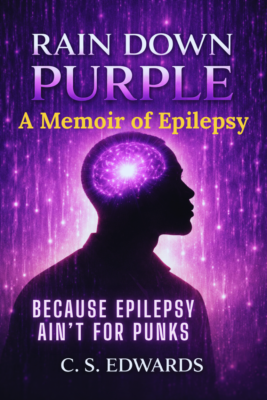
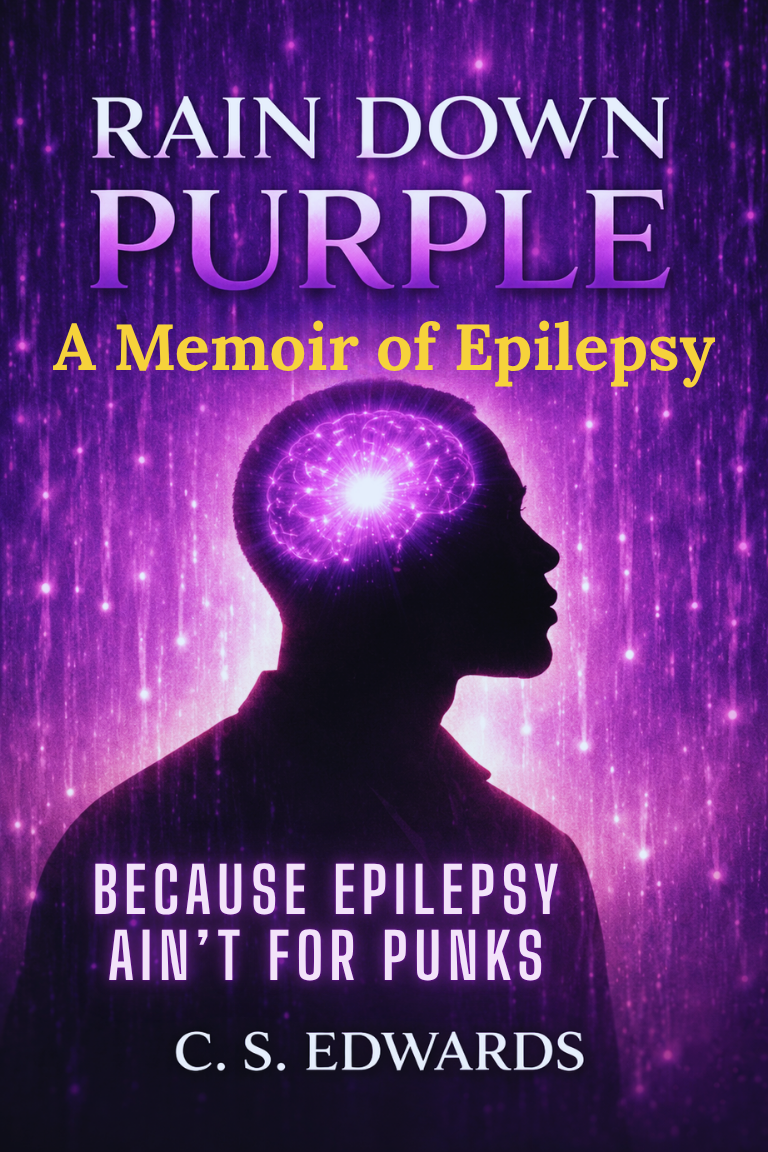
His memoir, Rain Down Purple: Because Epilepsy Ain’t for Punks, reflects a journey marked by misdiagnosis, perseverance, and ultimately purpose. What began as a personal struggle with an invisible neurological disorder has become a lifelong commitment to helping others navigate similar experiences.
Edwards serves as a certified seizure first aid responder and volunteers with patients and caregivers in the Epilepsy Monitoring Unit at the University of Cincinnati Medical Center. In this role, he offers encouragement, understanding, and practical support to individuals and families facing the uncertainty of seizure disorders.
Beyond the hospital, he has contributed his perspective as a patient advocate on local, state, and national health advisory boards, helping shape conversations around neurological care, patient rights, and access to treatment. His work focuses on bridging the gap between medical systems and the lived realities of those they serve.
As a speaker, Edwards engages audiences with honesty and insight, addressing topics such as epilepsy awareness, invisible illness, resilience, and the importance of listening to the body. His message is grounded in both experience and empathy, offering a voice for those who often feel unheard.
Through writing, advocacy, and community engagement, C.S. Edwards continues to work toward a future where epilepsy is better understood—and where those living with it are seen, supported, and empowered.
CHAPTERS
What You Will Learn?

Experience Without Language
Childhood confusion and invisible symptoms
Attempt to Explain and Define
Medicine, work, rights, and the body’s limits.
Integration and Understanding
Rhythm, awareness, purpose, advocacy.
About the Author And Book
This book speaks to many audiences at once.
What I wish I knew
C.S. Edwards does not provide medical advice. Based on my lived experience, there are key insights I want you to know. This content serves as a vital guide to help you recognize the signs of epilepsy and to encourage you to seek medical advice when needed.